Executive Summary
AKQA Italy, renowned for its cutting-edge creativity and innovation, came to Being at Full Potential to help reinvigorate their leadership team. Highly skilled yet quietly constrained, the team's Human Potential Assessment revealed a centre of gravity anchored in Reason-Based Management — effective for structured delivery, but limiting the deeper creativity, trust, and cohesion the team needed.
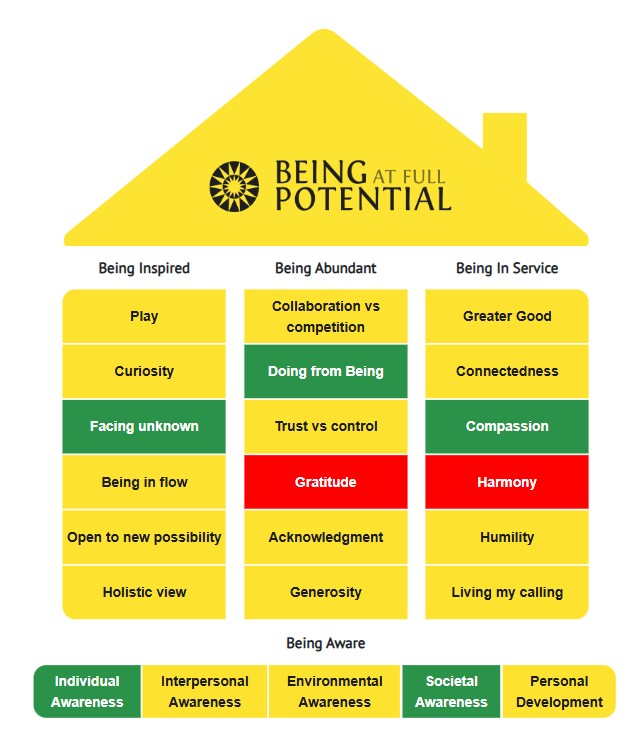
Three dimensions stood out as underdeveloped: Harmony (quality reflection and care), Gratitude (seeing opportunity in challenge), and Trust (comfort with uncertainty). A 2-day workshop created the conditions for the team to surface unspoken dynamics, reconnect with their shared purpose, and begin the shift toward Wisdom-Based Management.
The result: a leadership team that moved from guarded and siloed to open, connected, and aligned around a renewed creative vision.
Background
AKQA Italy's leadership team was facing challenges that were quietly eroding their edge. While individually capable and experienced, the group had drifted from the qualities that made them exceptional: curiosity, openness, and creative courage. Trust had thinned. Energy had become reactive. The team expressed a need to reconnect with their collective purpose, reignite their energy, and build deeper collaboration within the group.
To address these challenges, Being at Full Potential designed a 2-day Human Potential Workshop, centred on unlocking the leadership team's latent qualities and aligning them around a shared vision for the future.
Objectives
- 1.Reignite creativity, vision, and energy within the leadership team.
- 2.Foster deeper trust, care, and loyalty among team members.
- 3.Address key areas of friction and unlock the group's human potential.
- 4.Enable the team to align around a renewed sense of purpose and collaboration.
The Intervention
The intervention was structured around a 2-day workshop underpinned by the results of the team's Human Potential Assessment. This assessment provided valuable insights into the team's strengths and areas for growth, acting as a foundation for transformational conversations.
Key Dimensions Highlighted by the Assessment
- 1.Harmony: The need for quality reflection and care — stepping back from the pace of the business to reconnect with what matters.
- 2.Gratitude: The ability to see opportunities even in challenging situations — shifting from problem-focus to possibility.
- 3.Trust: Comfort with uncertainty and stretching beyond comfort zones — leaning into the unknown as a source of creativity rather than threat.
The Human Potential Maturity Framework
The assessment revealed the team's centre of gravity was anchored in the Reason-Based Management stage of the Human Potential Maturity Framework. This stage emphasises rational thinking, logic, and structured decision-making — powerful for operations, but limiting when navigating ambiguity or transformational growth.
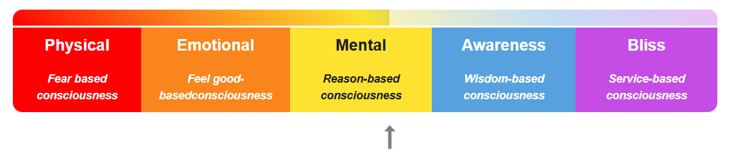
The team's developmental invitation was to transition toward Wisdom-Based Management: building upon the strengths of rational leadership while integrating authentic relationships, intuition, and a deeper connection to purpose. The shift from competition to collaboration. From logic alone to logic and heart.
Day 1 — Creating a Safe Space for Transformation
The first day was intentionally designed to slow down and create the conditions for openness and vulnerability. As facilitators, we prioritised:
- Deep Listening: Listening to each individual and the collective with empathy and curiosity.
- Non-Judgment: Creating a judgment-free environment where team members could speak openly about their experiences.
- Presence: Being fully present with the group to encourage them to be fully present with each other.
This slowing down was critical for establishing trust and setting the foundation for the transformational work ahead. Team members began revealing more of their inner truths — surfacing the emotional and relational dynamics that had long gone unspoken.
Day 2 — Awakening Creativity and Vision
Building on the safe space established in Day 1, the second day was a time of renewal and activation. Through carefully designed exercises and conversations, the team:
- Reconnected on a Being Level: Experiencing a sense of shared humanity and purpose, which unlocked new layers of creativity and energy.
- Explored Key Dimensions: Discussed the areas highlighted by the assessment (Harmony, Gratitude, and Trust) and reflected on how to cultivate these qualities within the team.
- Embodied Wisdom-Based Management: Engaged in practices that invited intuition, collaboration, and a deeper sense of meaning to guide their leadership.
- Aligned on a Shared Vision: Collaboratively defined a more inspirational vision for the team, grounded in trust, creativity, and togetherness.
Key Insights
- The Power of Slowing Down: The deliberate pace of Day 1 allowed a deeper level of connection and self-awareness to emerge. The team's energy on Day 2 validated the importance of this approach.
- Creating Safe Conditions: Deep listening, non-judgment, and presence were critical to creating a space where team members felt safe to share their truths and explore new possibilities.
- Transformational Conversations: The Human Potential Assessment acted as a mirror, sparking meaningful dialogue about areas for growth and alignment.
- Alignment of Being and Doing: By first connecting at a Being level, the team was able to unleash their potential at the Doing level, resulting in practical, high-impact outcomes.
"When the Being comes alive, the Doing thrives."