Executive Summary
After operating without consistent leadership for 18 months, Teach For America's Human Assets Leadership Team had become fragmented. Silos between functions, reactive ways of working, and limited collaboration were affecting the team's ability to lead effectively.
A Human Potential assessment revealed lower expression in four key areas: Syncing Individual & Collective Purpose, Gratitude (seeing the goodness even in challenging times), Team Awareness (how well-articulated and well-received the team's collective purpose is), and Inventiveness (the ability to create and produce radically new products and services).
Through assessments, coaching, and a 2-day immersive workshop, the team slowed down, created space for honest dialogue, and practiced deep listening without judgment. They moved from operating as five separate functional leaders to functioning as one cohesive leadership team. Follow-up coaching helped these shifts become lasting. The work was championed by then-Chief People Officer Laura Saldivar Luna.
The result was a more aligned, aware, and inventive leadership team — better positioned to model the culture needed to support educators and students.
The Challenge
The Human Assets Leadership Team had developed strong silos across its five functional areas. Cross-team collaboration was limited, and the group often defaulted to reactive, urgency-driven patterns. Many on the team sensed they were not yet operating as a unified leadership body.
"If we show up fractured, if we show up siloed… that then becomes the energy that the rest of the team sees and observes." — Team leader, Teach For America
The Assessment: Naming What Was Missing
The Human Potential assessment made the gaps visible. It showed lower expression in four critical areas:
- Sync Individual & Collective Purpose — Measures an individual's and organisation's ability to leverage the passions and talents of their people in order to meet and exceed the deliverables of the organisation.
- Gratitude — Seeing the goodness even in challenging times.
- Team Awareness — How well-articulated and well-received the team's collective purpose is.
- Inventiveness — The ability to create and produce radically new products and services.
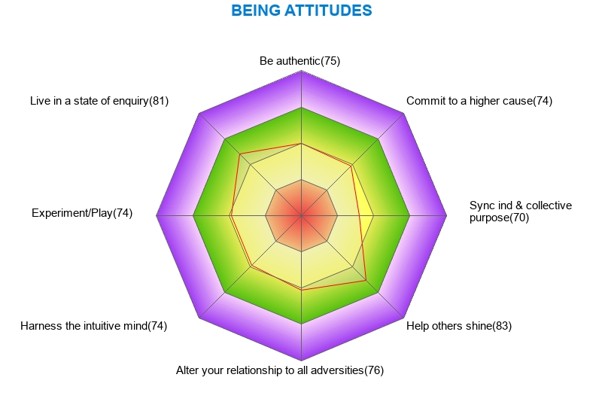
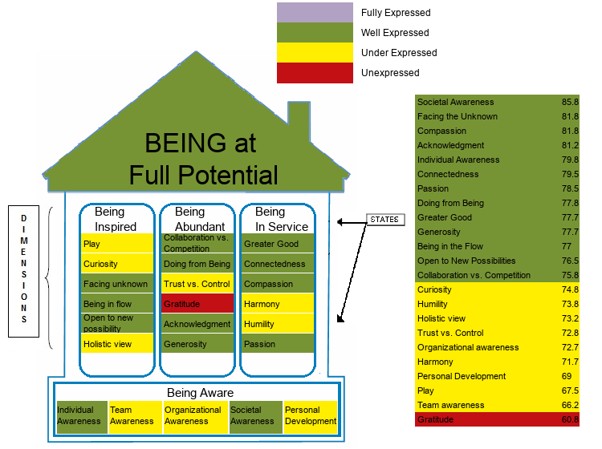
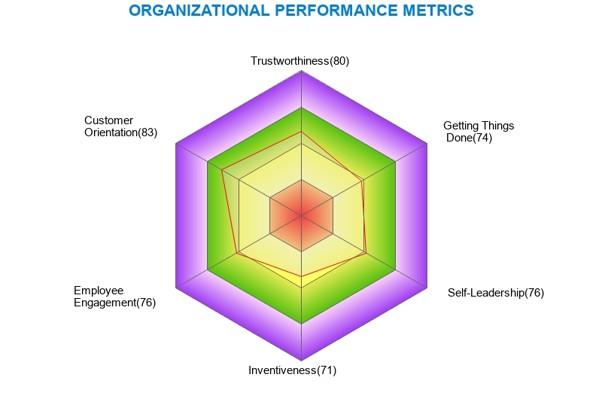
These findings helped the team understand why they were struggling to align and lead with greater impact.
The assessment didn't just name the problem — it created a shared language. When a team can see its blind spots together, the conversation shifts from blame to possibility.
How the Shifts Happened
The 2-day workshop created something the team had been missing: time and safety to slow down. Instead of rushing into tasks, they practiced arriving fully present. This shift opened the door to deeper work.
Early in the process, the team engaged in a Declaration exercise. They named the patterns they had been operating under and made a clear commitment to who they wanted to be moving forward.
"We made a statement to say this is who we've been being… and this is who we commit to be moving forward… collaborative and visionary and powerful partners at all levels who are then able to give our full gifts to the organization. We had been being very siloed… very reactive and that's not the fullest expression of our leadership individually nor collectively." — Team leader, Teach For America
In the safer, slower space created during the workshop, team members began speaking uncomfortable truths. Through deep listening without judgment, they explored what was truly preventing them from working together effectively. This helped improve how clearly and collectively the team's purpose was articulated and received — directly addressing the Team Awareness gap identified in the assessment.
"When we started to do that, particularly as an executive team, wow, I saw a bunch of new possibilities and new choices begin to open up for us because we were slowing down to see all the possibilities that were available in the present moment and not operating from fear or worry or doubt." — Team leader, Teach For America
These presence practices supported greater Gratitude and Inventiveness, enabling the team to move beyond reactive responses and explore more creative, forward-looking ways of working.
Sustaining the Transformation
While the workshop created important breakthroughs, lasting change required ongoing support. Follow-up coaching — both with the full leadership team and at the individual level — was critical.
Team coaching helped the group continue practising presence, deep listening, and collective decision-making amid real organisational pressures. Individual coaching supported leaders in addressing personal patterns that influenced the team. Together, these ongoing conversations turned initial shifts into sustainable new ways of leading.
A 2-day workshop can crack open a team. But sustained coaching is what turns a breakthrough moment into a new way of operating — embedding presence, trust, and collective purpose into everyday leadership.
Impact on the Leadership Team
By the end of the engagement, the Human Assets Leadership Team demonstrated clear progress in the four areas previously identified as lower expression:
- Stronger alignment between individual contributions and collective purpose.
- Greater capacity to approach challenges with openness and possibility.
- Clearer articulation and shared ownership of the team's collective purpose.
- Increased ability to generate creative, forward-looking solutions rather than defaulting to reactive approaches.
The team began operating with greater cohesion and intentionality.
Inspiration for Education Organisations
Many education organisations face similar dynamics: passionate teams working in silos, constant urgency, and difficulty maintaining alignment while navigating complex change. This case illustrates what becomes possible when a leadership team is given the space and support to slow down, speak honestly, and listen deeply.
When teams move from fragmented functional leadership to cohesive, purpose-aligned leadership, the benefits extend far beyond the team itself.
"If we make a choice to switch from that to being a collective… we then get a different type of energy and when we have a different energy we get a different type of outcome." — Team leader, Teach For America
For education organisations seeking to build leadership teams capable of meeting today's challenges with greater clarity, creativity, and humanity, this work offers a powerful and practical path forward.